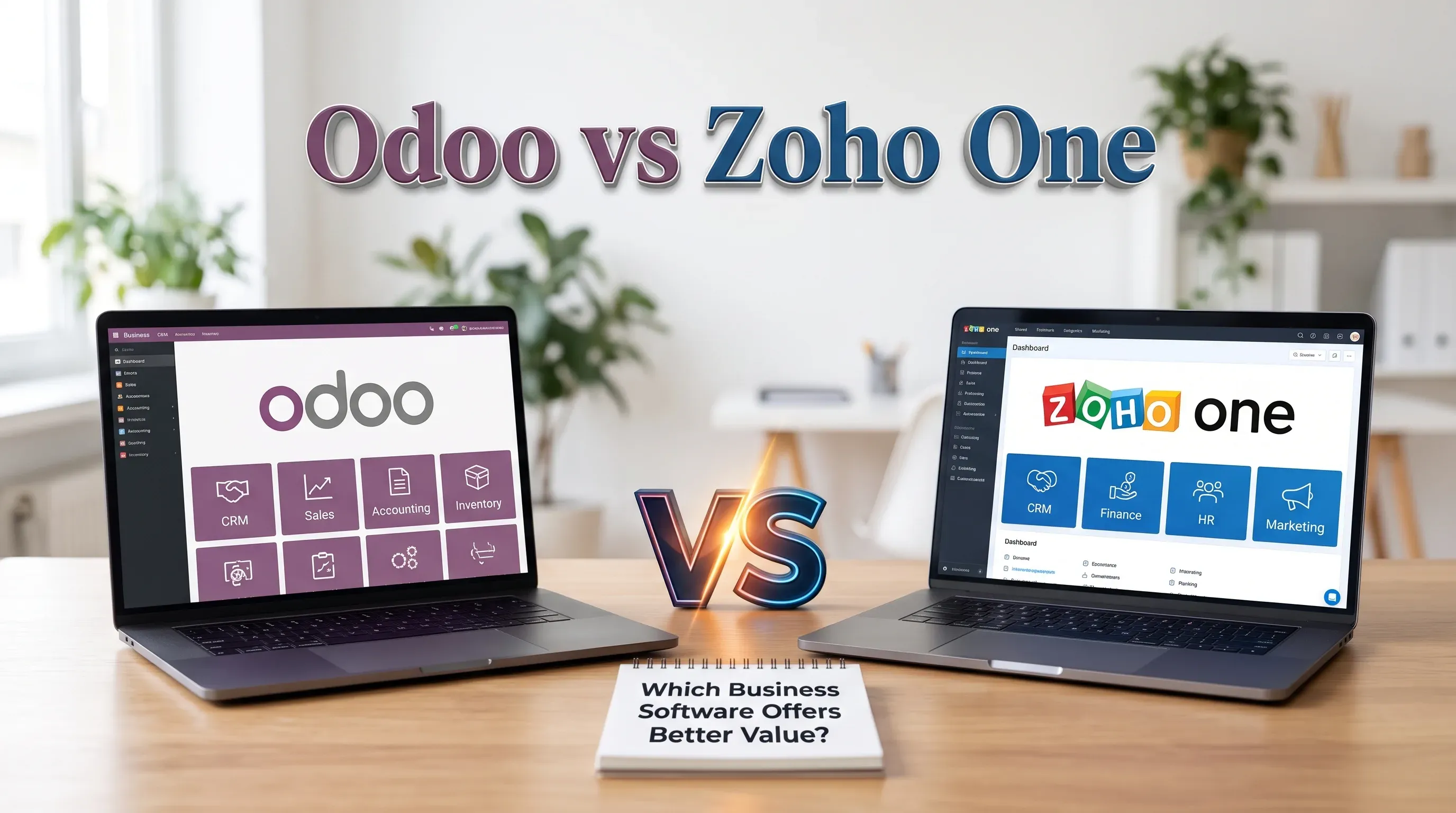
Odoo vs Zoho One: Which Business Software Offers Better Value?
Odoo vs Zoho One comparison covering features pricing benefits accounting CRM inventory management and the best business software for small businesses and growing companies
Jump to section
Compare Odoo vs Zoho One to discover their features, pricing, benefits and differences. Find out which business software is best for managing accounting, sales, inventory and daily operations while supporting your business growth.
Odoo vs Zoho One: Which Business Software Offers Better Value?
Running a business involves managing many different activities, from accounting and sales to inventory and customer relationships. When these activities are handled using different software, things can quickly become confusing. Important information may be scattered across multiple platforms, and employees may spend more time managing tools than focusing on their actual work.
This is why choosing the right business management software matters.
Two popular options businesses consider are Odoo and Zoho One. Both platforms offer a collection of tools designed to simplify business operations, improve productivity and support growth. However, they have different approaches, features and pricing structures.
So, which one should you choose?
In this guide, we will compare Odoo vs Zoho One, explore their main features, advantages, disadvantages and pricing considerations, and help you decide which solution offers better value for your business.
What Is Odoo?
Odoo is an all-in-one business management and ERP software platform designed to help companies manage their daily operations.
Instead of using separate tools for accounting, sales, inventory and customer management, businesses can connect these activities through Odoo applications.
Some of its popular features include:
- Accounting: Manage invoices, payments, expenses and financial records.
- CRM: Organise customer information, leads and sales opportunities.
- Inventory Management: Track stock, manage warehouses and monitor product movements.
- Sales Management: Create quotations, process orders and manage sales activities.
- Purchase Management: Handle supplier information and purchase orders.
- Manufacturing: Manage production processes and manufacturing operations.
- Website and eCommerce: Build websites and manage online stores.
One of the biggest advantages of Odoo is its flexibility. Businesses can start with the applications they need and add more functionality as they grow.
For example, a small retail business can begin with sales and inventory management. Later, it can add accounting, purchasing and other applications as its operations become more complex.
This makes Odoo a suitable option for businesses looking for an ERP solution that can grow with them.
What Is Zoho One?
Zoho One is an integrated business software suite that brings together applications for managing different areas of a company.
It is designed to help businesses manage their activities using connected applications rather than depending on several unrelated software providers.
Zoho One includes applications such as:
- Zoho CRM: Manage customers, leads and sales activities.
- Zoho Books: Handle accounting, invoices and financial transactions.
- Zoho Inventory: Manage stock, orders and warehouse activities.
- Zoho People: Organise employee information and HR processes.
- Zoho Projects: Plan projects and track tasks.
- Zoho Desk: Manage customer support and service requests.
- Zoho Analytics: Create reports and understand business performance.
- Zoho Campaigns: Manage email marketing activities.
The biggest advantage of Zoho One is the variety of applications available within one business software ecosystem.
For example, a small company can use Zoho CRM to manage customers, Zoho Books for accounting and Zoho Projects to organise its work.
These applications can work together, helping employees manage business activities more efficiently.
Zoho One is especially useful for businesses looking for an integrated collection of applications without building a complicated software setup.
Odoo vs Zoho One: Key Feature Comparison
Both platforms offer useful business management features, but the right choice depends on what your company needs.
Let's look at their main differences.
1. Business Management
Odoo is designed to connect important business operations through its ERP applications. Businesses can manage sales, purchasing, accounting, inventory and manufacturing within one system.
For example, when a company receives a customer order, Odoo can connect the sales process with inventory and invoicing.
Zoho One takes a slightly different approach. It provides specialised applications for different business activities, such as CRM, accounting, HR and project management.
Which is better?
Odoo is a strong option for businesses that need connected operational processes. Zoho One is suitable for companies that want a collection of applications to manage different departments.
2. Accounting and Finance
Accounting is one of the most important parts of running a successful business.
Odoo Accounting helps businesses manage invoices, expenses, payments, bank transactions and financial reports.
Zoho One includes Zoho Books, which provides tools for invoicing, expense tracking, payment management, bank reconciliation and financial reporting.
Zoho Books also offers regional tax features depending on the country and available edition.
Which is better?
Both platforms provide useful accounting features. Zoho Books is a good choice for businesses looking for dedicated cloud accounting software. Odoo is worth considering when accounting needs to work closely with inventory, purchasing and other ERP operations.
3. Customer Relationship Management
Building strong customer relationships is important for every business.
Odoo CRM helps businesses organise leads, track sales opportunities, manage customer information and monitor their sales pipeline.
Zoho CRM provides tools for managing leads, following customer interactions, automating sales activities and analysing sales performance.
Which is better?
Both offer useful CRM functionality. Odoo is attractive when customer orders and sales activities are closely connected with other business operations. Zoho One is a strong choice for companies that want CRM alongside marketing, customer support and other applications.
4. Inventory Management
Managing inventory can become difficult when a business handles many products, suppliers and customer orders.
Odoo Inventory helps businesses monitor stock levels, manage warehouse operations, track product movements and process deliveries.
Zoho One includes Zoho Inventory, which supports stock management, order processing, warehouse management and inventory tracking.
Which is better?
Odoo is worth considering for businesses with complex inventory and warehouse requirements. Zoho Inventory is useful for companies that need organised stock and order management within the Zoho ecosystem.
5. Customisation and Flexibility
Every business works differently. Some companies need simple processes, while others require specialised workflows.
Odoo provides customisation options through its applications, configuration tools and development capabilities. Businesses can adapt workflows and add functionality based on their requirements.
Zoho One also provides customisation and automation options. Tools such as Zoho Creator and Deluge can help businesses build applications and automate specific processes.
Which is better?
Odoo is a strong option for businesses requiring deeper ERP customisation. Zoho One is suitable for companies that want to customise applications and automate everyday business activities.
6. Ease of Use
Business software should make daily work easier rather than create additional difficulties.
Odoo offers a central environment with different business applications. However, companies with complex requirements may need proper configuration and employee training.
Zoho One provides separate applications for different business activities. Employees can use the tools relevant to their responsibilities.
Which is better?
Zoho One may feel more convenient for businesses introducing individual applications gradually. Odoo can be a good choice for companies that prefer managing connected business processes through an ERP platform.
Odoo vs Zoho One: Pricing Comparison
Pricing is an important factor when selecting business management software.
However, Odoo and Zoho One use different pricing structures, so it is important to understand how their subscriptions work before making a decision.
Odoo Pricing
Odoo offers different subscription options based on business requirements.
Its main plans include:
- One App Free: Access to one application with unlimited users under the free plan.
- Standard Plan: Access to Odoo applications through one subscription.
- Custom Plan: Additional capabilities for businesses requiring more advanced functionality.
The Standard and Custom plans generally use per-user subscription pricing. Additional expenses may apply for implementation, custom development and other services.
Zoho One Pricing
Zoho One offers different licensing options to suit business requirements.
Its main licensing models include:
- All Employee Pricing: Businesses purchase licences for all employees covered by the applicable licensing requirements.
- Flexible User Pricing: Businesses purchase licences for the employees who need access.
Zoho One also offers an Essentials edition for businesses looking for a more focused set of applications.
The final cost depends on the selected edition, number of users, billing frequency and regional pricing.
Which Offers Better Value for Money?
There is no single answer because every business has different requirements.
Odoo may offer better value for companies that need several connected ERP applications.
Zoho One can offer excellent value for businesses that want access to a wide collection of applications for sales, accounting, HR, marketing and customer support.
Before selecting either platform, consider the complete cost, including:
- Software subscription fees
- Number of user licences
- Implementation and configuration
- Data migration
- Employee training
- Customisation and integrations
- Ongoing maintenance and support
Our advice: Do not choose business software based only on its starting price. Consider which features your company will actually use and how much it will cost to manage the system over time.
You can check the latest plans on the official websites:
- Odoo Pricing: https://www.odoo.com/pricing
- Zoho One Pricing: https://www.zoho.com/one/pricing/
Prices and subscription conditions vary by country and billing arrangement. Always confirm the latest regional quotation and applicable taxes before purchasing.
Advantages and Disadvantages of Odoo
Before choosing Odoo, it is helpful to understand what makes it useful and where it may require additional effort.
Advantages of Odoo
1. Complete Business Management
Odoo brings together applications for accounting, sales, inventory, purchasing and other business activities.
2. Flexible Applications
Businesses can start with the applications they need and expand their software setup as they grow.
3. Strong Inventory Features
Its inventory tools are useful for managing stock movements, warehouses and purchasing activities.
4. Customisation Options
Businesses can adapt the platform to their operational requirements using available configuration and development tools.
5. Connected Workflows
Different departments can work with shared business information, helping reduce unnecessary manual work.
Disadvantages of Odoo
1. Setup Can Be Complex
Businesses with specialised requirements may need professional implementation and configuration.
2. Employee Training May Be Needed
Employees may need time to understand the applications and workflows.
3. Customisation Can Increase Costs
Advanced development and additional requirements can increase the overall project budget.
4. Proper Planning Is Important
Businesses should understand their requirements before selecting applications and configuring the system.
Advantages and Disadvantages of Zoho One
Zoho One also provides several benefits, especially for companies that want multiple business applications in one ecosystem.
Advantages of Zoho One
1. Wide Range of Applications
Zoho One offers applications for CRM, accounting, HR, marketing, customer support and project management.
2. Connected Business Tools
Businesses can connect different applications and share information across supported services.
3. Flexible Licensing Options
The All Employee and Flexible User pricing models provide different licensing choices.
4. Automation Features
Zoho applications provide workflow automation tools that can help reduce repetitive tasks.
5. Suitable for Growing Businesses
Companies can use different applications depending on their requirements and expand their setup as they grow.
Disadvantages of Zoho One
1. Multiple Applications to Manage
Employees may need to work with different interfaces depending on their responsibilities.
2. Licensing Conditions Need Attention
The All Employee pricing model may not suit every business because of its employee licensing requirements.
3. Advanced Customisation May Require Expertise
Companies with complex requirements may need technical assistance to configure applications and integrations.
4. Application Features Can Differ
Different Zoho applications have their own features, plans and limitations. Businesses should confirm that the required functionality is included.
Which Business Should Choose Odoo?
Odoo is a suitable option for companies that need better control over their daily operations.
It can be particularly useful for the following businesses.
Retail and Wholesale Businesses
Retailers and wholesalers can use Odoo to manage products, stock, purchasing, sales and accounting through connected applications.
Manufacturing Companies
Manufacturing businesses can use Odoo to organise production activities, materials, inventory and operational workflows.
Distribution Companies
Companies managing multiple products, warehouses and frequent customer orders may benefit from its ERP capabilities.
Businesses With Complex Operations
Companies that require customised processes and connected departments may find Odoo a practical solution.
Which Business Should Choose Zoho One?
Zoho One is a good option for companies that want a collection of applications to manage different business activities.
It can be particularly useful for the following businesses.
Startups
Startups can use applications for accounting, customer management, marketing and collaboration as their business develops.
Small Businesses
Small companies can manage everyday activities using connected applications without immediately investing in a complex ERP setup.
Service-Based Companies
Consulting firms, agencies and professional service providers can use Zoho applications to manage leads, projects, customer support and invoicing.
Growing Companies
Businesses expanding their teams can use different Zoho applications to organise departments and improve communication.
Odoo vs Zoho One: Which Is Better for Small Businesses?
For small businesses, choosing between Odoo and Zoho One depends on the type of work they do.
If your company mainly provides services and needs customer management, accounting, project tracking and communication tools, Zoho One may be a suitable choice.
On the other hand, if your company handles products, warehouses, purchasing, sales and inventory, Odoo may provide a more suitable ERP environment.
For example, a digital marketing agency may benefit from Zoho CRM, Zoho Books and Zoho Projects to manage customers, invoices and ongoing projects.
A wholesale business managing hundreds of products and multiple stock locations may find Odoo more suitable for connecting inventory, purchasing and accounting activities.
The important thing is to choose software that solves your current business challenges while supporting future growth.
How to Choose Between Odoo and Zoho One
Before making your final decision, take some time to understand your business requirements.
Here are five important things to consider.
1. Understand Your Business Requirements
Identify the activities you want to manage, such as accounting, CRM, inventory, manufacturing or project management.
2. Check the Number of Users
Consider how many employees need access and compare the licensing requirements of both platforms.
3. Consider Customisation Needs
If your business follows specialised workflows, check whether the software can support them without unnecessary complexity.
4. Calculate Your Total Budget
Look beyond subscription costs. Include implementation, migration, training and ongoing support expenses.
5. Think About Future Growth
Choose a solution that can support additional users, departments and business activities as your company expands.
Taking time to compare these points can help you avoid unnecessary software expenses and make a better long-term decision.
Frequently Asked Questions
Clear answers to common questions about this guide and implementation.
Neither platform is better for every business. Odoo is a strong option for companies that need integrated ERP functionality, while Zoho One is suitable for businesses looking for a collection of connected applications.
About the author
Nihala Nizar
Blog Creator
blog writer who transforms ideas and experiences into engaging, meaningful stories. Dedicated to creating well-written content that informs, inspires, and connects with readers
Related Articles
More in Software & Technology
Zoho Workplace vs Google Workspace: Which Is Worth Buying?
Saturday Nov 14, 2026
Not sure whether to choose Zoho Workplace or Google Workspace? Compare business email, document editing, cloud storage, team communication, security and pricing to find the right productivity suite for your business.
Zoho Books vs Other Accounting Software: Which Should You Choose?
Sunday Nov 15, 2026
Compare Zoho Books with TallyPrime, BUSY, Vyapar and Odoo to find the right accounting software for your business. Explore features, pricing, invoicing, GST management and financial reporting to make an informed choice.
ZKTeco Biometric Devices Compared: Which Model Fits Your Business Needs?
Friday Nov 13, 2026
Explore the best ZKTeco biometric devices for businesses in 2026. Compare fingerprint and facial recognition, attendance tracking, access control and key features to find the right model for your workplace.


